In 2025, global investors are no longer merely chasing yield—they’re chasing peace of mind. In a world increasingly shaped by geopolitical volatility, inflationary pressures, and financial unpredictability, high-net-worth individuals are reassessing what constitutes a sound, future-proof investment. The paradigm is shifting from purely numerical return metrics to a more holistic value proposition—one that merges quality of life, location resilience, and capital appreciation. In this context, Mallorca has emerged as Europe’s definitive lifestyle investment destination. Once considered just a vacation island, it is now positioning itself as a cornerstone in wealth migration and portfolio diversification strategies.
From destination to strategic asset
Over the last two decades, Mallorca has transformed from a leisure-centric hotspot into a strategic asset on the European real estate map. While its iconic turquoise beaches, yacht-laden marinas, and rugged mountain backdrops remain a draw, the island now attracts a distinctly affluent and discerning international clientele. Tech founders, hedge fund managers, second-generation family office heirs, and global tastemakers are not merely visiting—they are investing, relocating, and embedding themselves in Mallorca’s fabric.
This shift has not been incidental. It is underpinned by a matrix of geopolitical, macroeconomic, and cultural dynamics that uniquely position Mallorca for long-term capital preservation and elevated lifestyle utility. At the forefront of this dynamic is Spain’s geopolitical stability. As much of Eastern Europe and parts of the Middle East navigate instability, investors are looking to park their capital—and lives—in stable, rules-based environments. Spain, as a Eurozone member and mature democracy, offers legal protections, a stable currency, and predictable policy continuity. Mallorca benefits from these national frameworks, while simultaneously enjoying the psychological and geographical insulation of being an island. This duality—connectivity without chaos—is highly attractive to global citizens seeking safe harbor.
Access and enforced scarcity
Accessibility is another strategic advantage. Palma de Mallorca’s international airport ranks among the most connected in the Mediterranean, with year-round flights to major European hubs and seasonal routes extending to the U.S. and Middle East. This makes Mallorca not only reachable, but operationally viable as a base for business and family life. On-island infrastructure supports this further: robust broadband coverage across even rural areas, a healthcare ecosystem on par with international standards, and an increasingly diverse education network anchored by top-tier international schools. In essence, Mallorca is no longer a seasonal getaway—it’s a full-service platform for mobile professionals and high-net-worth families alike.
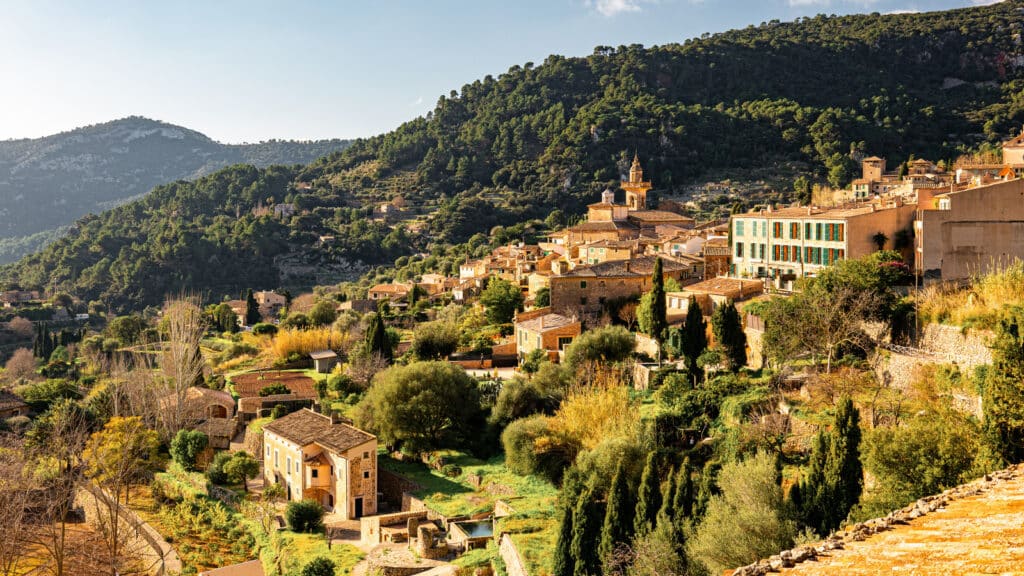
Critically, Mallorca’s value proposition is underwritten by enforced scarcity. While many destinations suffer from overdevelopment that erodes long-term value, Mallorca operates under some of the most stringent building regulations in Southern Europe. Key natural assets such as the UNESCO listed Tramuntana mountain range, agricultural plains, and greenbelt coastlines are protected by restrictive planning laws. This results in a finite development pipeline, especially in prime areas like Sóller, Deià, Valldemossa, Port Andratx, and Son Vida. In these micro-markets, demand consistently outpaces supply — a dynamic that creates durable upward price pressure and fortifies the long-term asset value of premium properties. For savvy investors, this equates to a rare form of supply-side hedging rarely available in other parts of Europe.
Tax and residency frameworks
The fiscal environment further enhances Mallorca’s strategic attractiveness. Spain has progressively refined its tax and residency frameworks to attract foreign capital and talent. The reformed Beckham Law allows qualifying newcomers to benefit from a flat tax on foreign income for up to six years—significantly optimizing net returns. The 2023 Digital Nomad Visa gives non-EU professionals the right to reside and work remotely from Spain with favorable tax terms. Mallorca becomes an access point to both the Schengen Zone and European lifestyle, particularly appealing to British nationals navigating post-Brexit limitations. These fiscal mechanisms, paired with Mallorca’s qualitative advantages, create a compelling dual value: lifestyle enrichment and tax optimization.
The new wealth tax surcharge now applies not only to individuals with net assets above EUR3M euros (up from the previous general theshold of EUR700k).
Property types and income potential
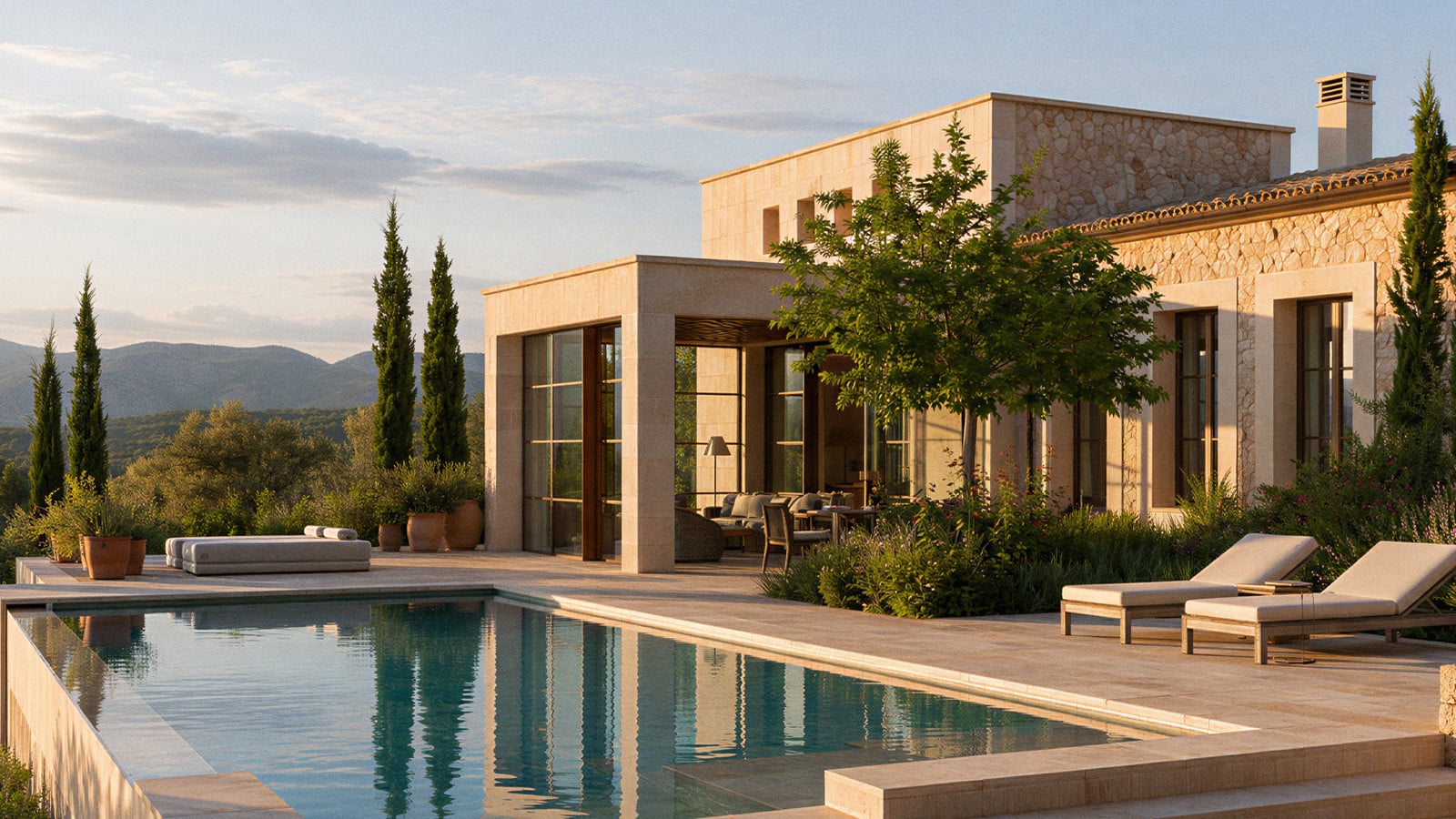
From an asset diversification perspective, Mallorca’s real estate market offers a wide range of typologies tailored to different investor profiles and life stages. There are cutting-edge seafront villas outfitted with smart home tech and unobstructed views. Rustic countryside fincas, surrounded by olive groves and vineyards, deliver privacy and authenticity. Elegant apartments in Palma’s Old Town blend historic charm with walkability. Hilltop estates in the Tramuntana mountains offer ultra-seclusion and panoramic vistas. This architectural and locational diversity enables investors to align purchases with strategic use cases—whether for personal use, multigenerational inheritance, or yield-focused rental deployment.
The income-generation dimension is robust and year-round. Unlike many Mediterranean islands that experience sharp tourism seasonality, Mallorca benefits from a diversified visitor economy. Cultural programming in Palma, golf and cycling tourism, and long-stay wellness travelers ensure a consistent flow of high-quality tenants throughout the calendar year. Properties with ETV tourist licenses command premium weekly rates in summer, while in winter, demand persists from digital nomads, professionals escaping Northern Europe, and long-stay guests. The evolution of hybrid luxury models—like wellness resorts and high-end serviced villas—has further raised the ceiling on what a rental asset in Mallorca can yield, both in revenue and reputation.
The emotional return
Yet beyond yield, another metric is emerging as central to decision-making: emotional return on investment. Post-pandemic, the calculus of wealth has expanded. Health, happiness, family time, and freedom of movement have entered the equation. Investors are asking themselves not just “what will this earn?” but “how will this feel?” Mallorca delivers on this front in ways few places can. It offers a strong sense of place: artisan markets, cultural festivals, medieval towns, and a thriving culinary scene. Its natural environment—clean air, crystal waters, and rugged landscapes—reinforces wellness and tranquility. It fosters community: from global entrepreneurs and remote professionals to creatives and retirees, Mallorca hosts a unique mix of like-minded individuals seeking a slower, richer life. Most of all, it offers legacy: homes that aren’t just investments, but intergenerational sanctuaries to be cherished and passed down.
In 2025, Mallorca isn’t a passing trend—it’s an investment strategy. It represents strategic convergence: between yield and emotion, growth and preservation, access and retreat. As global investors recalibrate their portfolios to balance risk, lifestyle, and legacy, Mallorca stands out as a sophisticated, multidimensional solution. It is a European safe haven with a Mediterranean soul—offering not just security, but serenity. For high-net-worth individuals seeking to future-proof their wealth and their well-being, Mallorca is no longer just an option. It is a conviction play.