Mallorca’s architectural landscape has changed through time, a blend of historical grandeur and cutting-edge innovation that mirrors the island’s cultural evolution and cosmopolitan appeal. From medieval bastions to cliffside retreats, the diversity of built forms across Mallorca is both a testament to its rich heritage and a canvas for contemporary vision.
Gothic Palma
At the heart of Palma, the island’s capital, two iconic landmarks stand as enduring symbols of Gothic time. The Castell de Bellver, perched high above the city, is a rare example of circular Gothic architecture — a striking anomaly in the European architecture. Constructed in the 14th century, its fortress-like structure served both defensive and royal purposes. Today, it offers panoramic vistas over Palma and the glittering Mediterranean beyond, anchoring the cityscape in historical gravitas as well as a site for classical concert.
A short distance away, the La Seu Cathedral — also known as the Cathedral of Santa Maria of Palma — dominates the seafront with its formidable silhouette. This Gothic masterpiece features a soaring nave and one of the world’s largest rose windows, filtering sunlight into kaleidoscopic hues. In February and November each year, the Festival of Light takes place. The sunlight enters through the larger eastern rose window (the largest in any European Gothic cathedral) and is projected onto the opposite wall creating a reflection of the rose winfdow. The building’s majesty is further enhanced by the interventions of Antoni Gaudí, who added liturgical and structural refinements in the early 20th century, and contemporary artist Miquel Barceló, whose ceramic installation in a side chapel introduces a bold, modern counterpoint. These enhancements embody Mallorca’s tradition of respecting the old while embracing the new.
The vernacular landscape
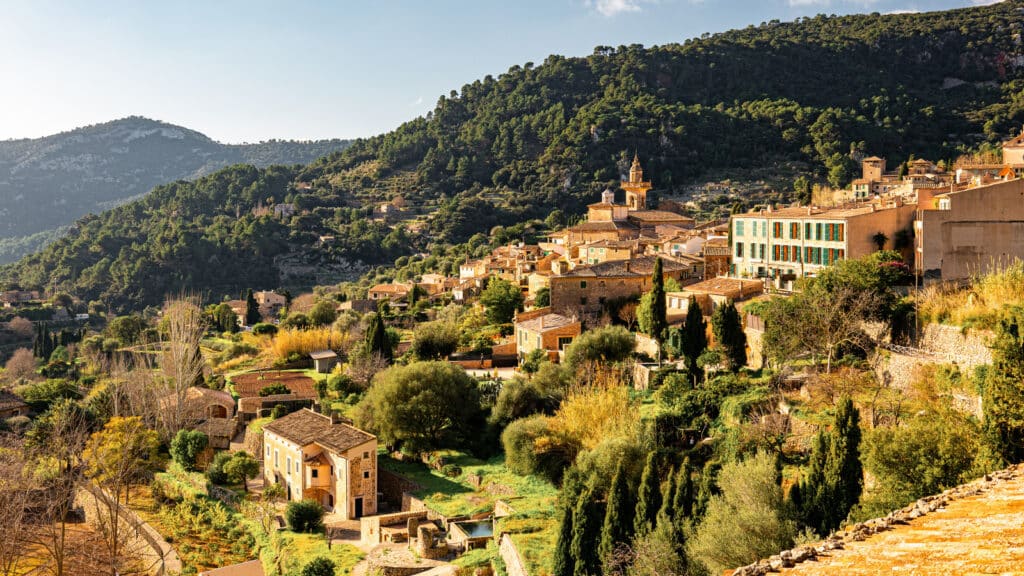
Beyond the capital, architectural narratives shift with the area. In the Tramuntana mountains lies the postcard-perfect village of Valldemossa, a beacon of traditional Mallorcan charm. Rustic stone houses are adorned with green shutters, terracotta roofs, and narrow cobbled streets that snake through the hillside. These homes reflect a centuries-old vernacular architecture defined by thick sandstone walls — crafted from local Marès stone — Arabic-style curved roof tiles, and shaded interior patios, relics of the island’s Moorish past.
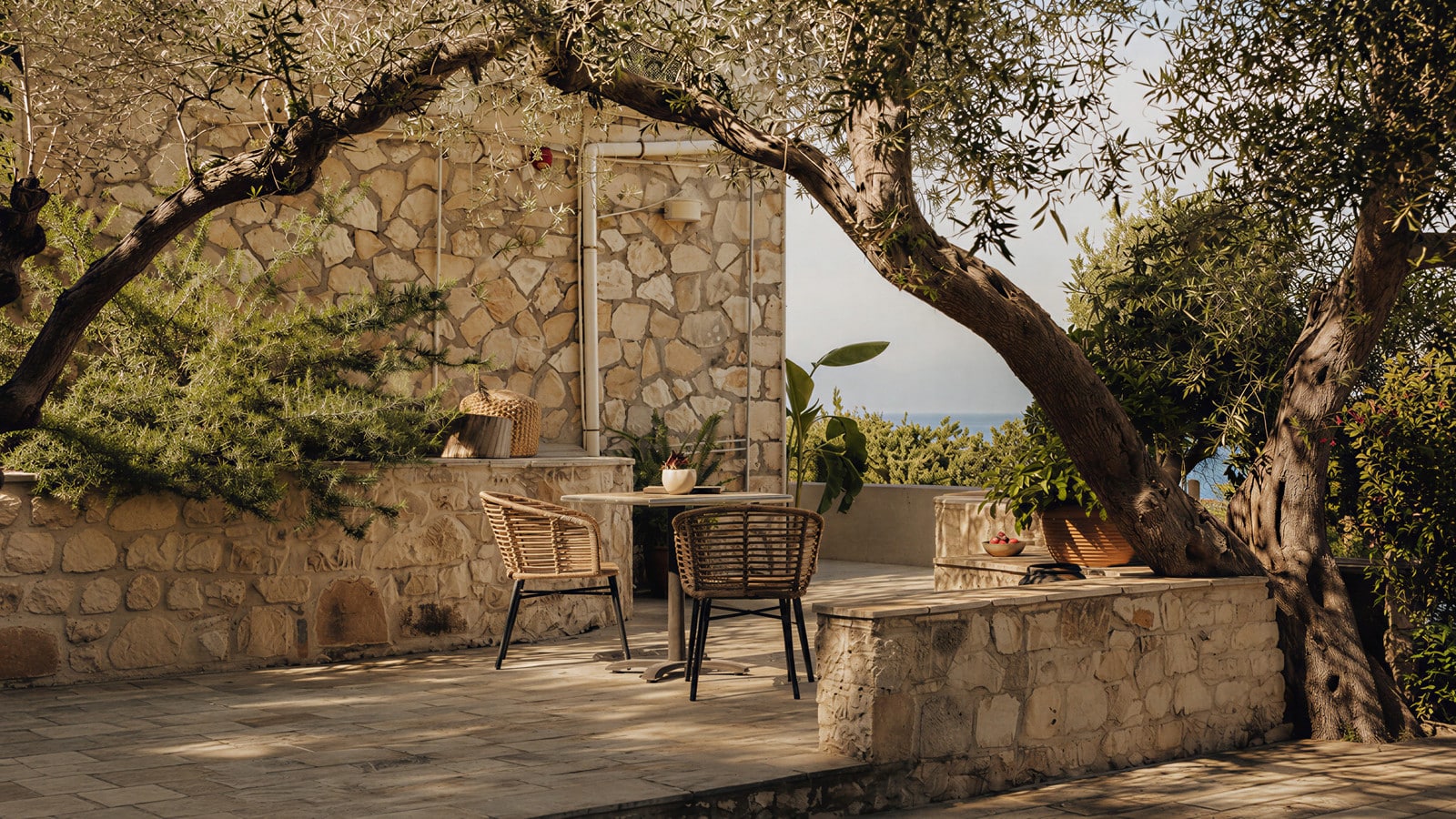
Scattered across the countryside are fincas and possessions, rural estates that once formed the backbone of Mallorca’s agrarian society. These properties combine function with aesthetic restraint: expansive central courtyards, agricultural outbuildings, and living quarters arranged for both productivity and climate responsiveness. Often restored with care, they retain their traditional elements — exposed wooden beams, wrought iron fixtures, and Mediterranean gardens — while accommodating modern comforts.
Contemporary Mallorca
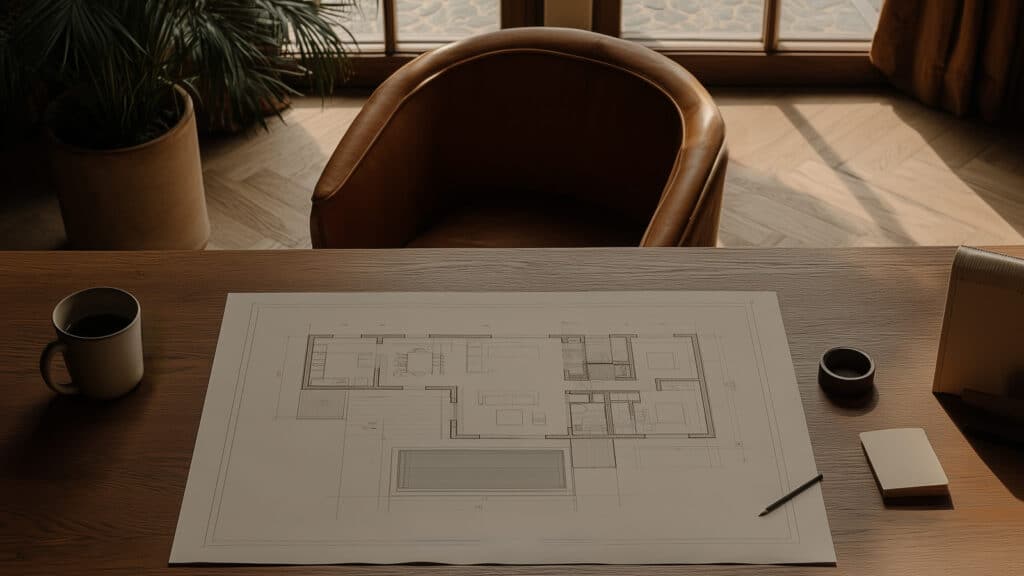
The elevated enclave of Son Vida presents Mallorca’s future-facing side. An elite residential zone nestled in the hills above Palma, Son Vida is synonymous with exclusivity and avant-garde design. Here, architectural experimentation meets luxury living. Contemporary villas, often bespoke commissions, showcase sleek minimalist lines, vast glass facades that erase boundaries between interior and exterior, and infinity pools that appear to spill into the horizon. These homes are more than visual statements — they are expressions of a sustainable lifestyle. Many incorporate passive cooling systems, solar arrays, and recycled or locally sourced materials, aligning high-end design with environmental responsibility.
Several architectural icons punctuate this modernist narrative. Can Lis, the renowned cliffside home designed by Danish architect Jørn Utzon (of Sydney Opera House fame), is a study in harmony with the land, using sandstone blocks and modular design to blur the line between structure and nature. Casa Fly by Beef Architekti, a beachside villa, reinterprets traditional building techniques through a contemporary lens, achieving a tactile, grounded elegance. And Neuendorf House, a collaboration between minimalist visionaries John Pawson and Claudio Silvestrin, stands as a monolithic retreat among almond groves — a sculptural exploration of light, space, and silence.
An architecture of continuity
Taken together, Mallorca’s built environment is a living archive of styles, materials, and philosophies. Its architectural diversity is not merely aesthetic — it tells the story of a place where history and innovation coexist with fluidity. The island’s appeal to homebuyers, investors, and aesthetes alike lies in this dynamic duality. Whether wandering through the Gothic shadows of Palma, absorbing the rural serenity of a stone finca, or reveling in the clean lines of a Son Vida villa, one experiences an architectural dialogue that spans centuries.
This is Mallorca: a place where the past is preserved not as a relic, but as a foundation; where design is both homage and horizon; and where every building, be it castle or contemporary residence, contributes to the island’s unmistakable sense of identity.